 Skip to content


If your dog makes a beeline for the lawn the moment you let them out, you're far from alone. Grass-eating is one of the most common behaviours dog owners ask about — and one that's worth understanding properly, because the instinct is usually telling you something.
It's More Instinct Than Accident
Dogs aren't malfunctioning when they eat grass. Wild canids consumed plant matter regularly as part of a whole-prey diet — vegetation came bundled with prey stomach contents, providing fibre, trace minerals, and digestive support.
Domestic dogs have retained this instinct. When your dog grazes, they're usually responding to something their body is telling them. The question worth asking is what.

So Why Do They Do It?
There are a few overlapping reasons, and for most dogs it's a combination:
Digestive discomfort.
Grass can act as a mild irritant that prompts vomiting — useful for a dog that feels nauseous or has eaten something that doesn't agree with them. If your dog eats grass urgently and is then sick, this is likely what's happening.
Gut imbalance.
Many dogs graze calmly with no vomiting. Here, it's thought to be about fibre intake and gut motility — the digestive system signalling it's missing something it needs.
Nutritional gaps.
A diet low in fibre, plant-based enzymes, or trace minerals increases the urge to graze. This is particularly common in dogs on highly processed diets where these elements are minimal or absent.
Boredom or habit.
Most dogs simply enjoy it. If the behaviour is calm, occasional, and your dog is otherwise well, it may just be a preference — though it's still worth asking whether their diet is giving them everything they need.
But Is It Healthy?
Garden and park grass carries real risks that mean you shouldn’t always laugh off your dog’s dietary habits.
Parasites.
Grass, along with poop and soil, is the most common transmission route for intestinal worms and other parasites. Lungworm larvae, in particular, are carried by slugs and snails that leave trails on grass — ingestion can lead to a serious and potentially life-threatening infection. Dogs that graze regularly are at higher risk.
Pesticides and herbicides.
Treated lawns and public green spaces are often sprayed with chemicals that are harmful when ingested. A dog that grazes habitually has no way of distinguishing treated grass from untreated.
Toxic plants.
Many gardens contain plants that are toxic to dogs — and a dog in the habit of eating vegetation is more likely to sample something they shouldn't.
So eating grass isn’t necessarily a sign that something is wrong. But if they eat grass consistently - they could be at risk of poison, parasites, and more.

How You Can Help
If your dog is a habitual grazer, the most effective thing you can do is address what's driving the behaviour — not try to stop it outright.
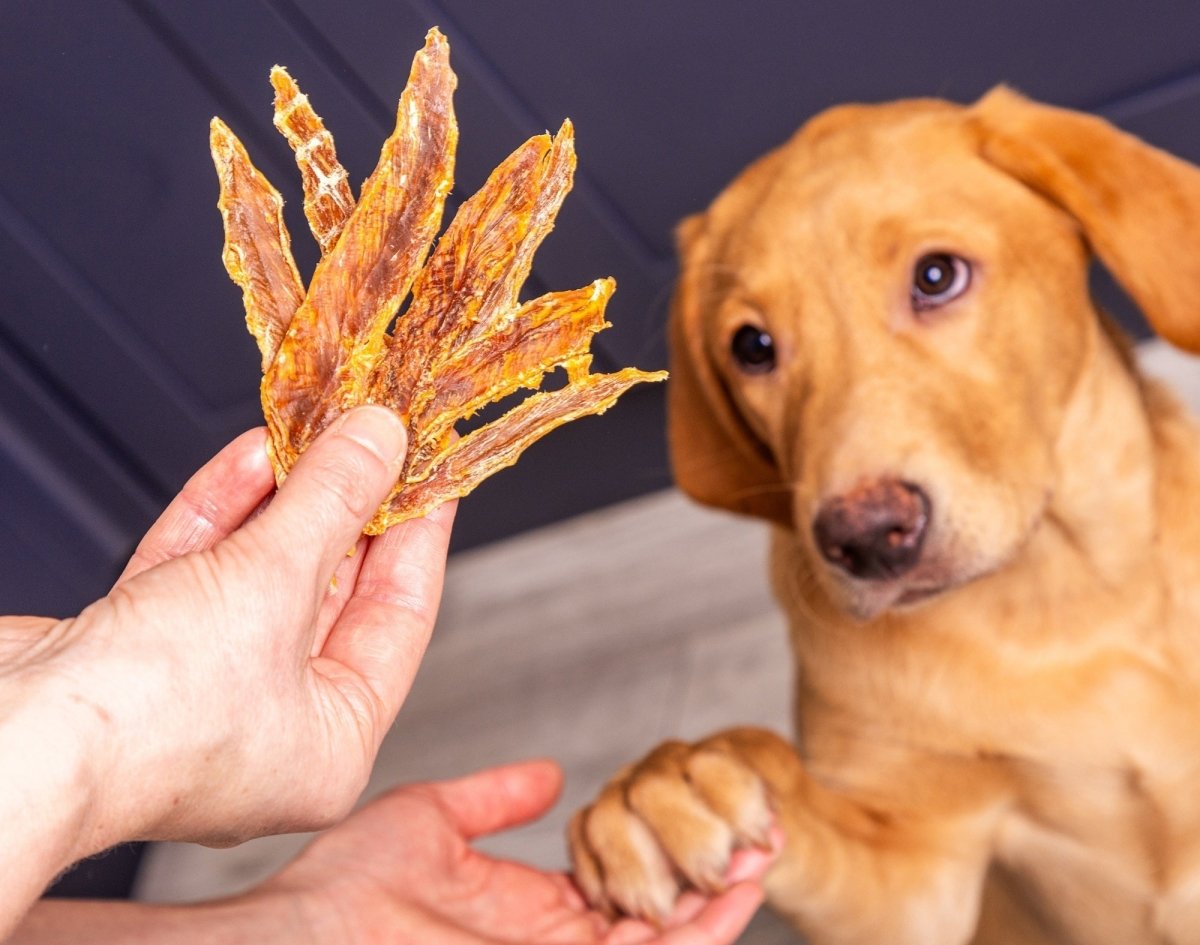
AniForte Grass & Stool-Eating Snack is designed to work with this instinct rather than against it. It provides the plant-based fibre, digestive enzymes, and trace nutrients that prompt the grazing behaviour in the first place — in a form the body can actually use. For many dogs, it significantly reduces the urge to graze on the lawn, because the underlying need is finally being met.
It's a particularly good fit for dogs on dry or processed diets, where plant matter is low across the board. And unlike the lawn, you know exactly what's in it.
The Gut Connection
Persistent grass-eating — especially the calm, habitual kind — is often the body's way of signalling that the digestive system isn't quite in balance. Dogs whose gut microbiome is thriving, whose fibre intake is adequate, and whose digestive enzymes are functioning well tend to graze far less compulsively.
Diet plays a significant role here. Dogs fed raw or minimally processed food — like the complete ranges from Natural Instinct or Nutriment Raw — typically consume a broader range of natural fibres and plant-based nutrients, which can reduce the urge to seek them out from the garden. Dogs on heavily processed dry diets are more likely to graze persistently, simply because the dietary gap is larger.
For dogs where the grass-eating seems driven by digestive discomfort, AniForte Digestox and Probiotic Tabs can help address the gut imbalance directly.
Frequently Asked Questions
Is it normal for dogs to eat grass every day? Daily grazing isn't unusual — but it's worth taking as a signal rather than ignoring it. Persistent grazing often points to a dietary gap, particularly in dogs on dry or processed food. It also increases exposure to parasites and treated grass, so it's worth addressing rather than accepting.
Why does my dog eat grass and then vomit? This is usually intentional. Dogs instinctively use grass as a mild emetic when they feel nauseous. Occasional instances are normal. If it's happening frequently, there may be a recurring digestive issue worth investigating with your vet.
Can grass-eating be stopped? The behaviour can be significantly reduced by addressing the underlying cause — gut health and fibre intake in particular. AniForte Grass & Stool-Eating Snack is formulated specifically to meet the need that drives the behaviour.
Does grass-eating mean my dog is missing nutrients? It can, particularly if the behaviour is habitual and calm rather than urgent. Fibre, digestive enzymes, and certain trace minerals are common gaps — especially in dogs on heavily processed diets.
My dog eats grass and poop — are these connected? Often, yes. Both are linked to digestive enzyme deficiency and gut imbalance. Addressing digestive health directly tends to reduce both behaviours.
Should I be worried about parasites? Yes, it's worth being aware of. Grass is a known transmission route for intestinal worms, and lungworm in particular can be picked up from slug and snail trails on damp grass. Regular parasite treatment is important for any dog, but especially for habitual grazers.

1 comment
📉 + 36,824.44 Dollars 🚀▶ graph.org/Coinbase-04-13?hs=f3e4fccbcae50c1b7ce9f2f30007df5c& 📉
zw3rs9
zw3rs9