Skip to content



A few flakes in your dog's coat are nothing to worry about. Skin renews itself all the time, and a change in the weather or a heavy shed can shake a little loose. But when the flakes keep coming back, or your dog won't stop scratching, it is usually a sign that something underneath needs a hand.
Here is how to tell what kind of dandruff you are looking at, the most common causes, what you can do at home, and when it is time to see the vet.
What dandruff looks like
Dandruff usually starts with dry skin. The skin itches, your dog scratches, and the flakes become visible, especially on a dark coat. The colour and feel of the flakes tell you a lot:
| White, dry flakes | Usually dry skin |
| Yellow, greasy flakes | Usually too much sebum (the skin's natural oil) |
If it carries on, you may also see hair loss, bald patches or scabs. Constant scratching can open small wounds, which makes a secondary infection more likely.
The most common causes
1. Short-term changes
Weather changes and dry indoor air, particularly with the heating on in winter, are the most common cause of a sudden bout of dandruff. This kind usually settles on its own.
2. Diet
Nutrition is one of the biggest factors. Too little, or too much, of certain vitamins, minerals and essential fatty acids can leave the skin dry and flaky. Food with lots of grains, protein substitutes or preservatives can also trigger itching in sensitive dogs. If you change your dog's food, do it gradually, because a sudden switch can show up in the skin as well as the stomach.
3. Allergies and intolerances
Ingredients such as grains or artificial additives can cause allergic reactions that show up as itching and flaking. A natural, additive-free diet suited to your dog often helps reduce flare-ups.
4. Seborrhoeic dermatitis
This is when the skin produces too much sebum, leading to a greasy coat and yellow flakes. It can be inherited, or it can follow another problem such as a hormonal imbalance or inflammation. It needs a vet's diagnosis.
5. Stress
Anxiety, boredom or too much stimulation can all lead to extra scratching, licking and nibbling, and the flakes follow. A good balance of activity, rest and mental stimulation often helps more than anything you put on the skin.
6. Too much washing
Bathing too often, or with the wrong shampoo, strips the skin's natural oils and upsets its pH balance and protective barrier.
What you can do at home
Groom, and wash gently
Regular brushing removes dead skin cells and dirt, and helps the circulation in the skin. When your dog does need a bath, use a mild shampoo made for sensitive skin, such as our Fur Harmony Sensitive Shampoo, which is made with aloe vera and is gentle on the skin's natural protective layer.
Look at the bowl
If your vet has ruled out a medical cause, the right supplements can help support the skin and coat from the inside. These are the ones owners most often use for skin and coat, and how much to give:
| Supplement | What it brings | Dogs | Cats |
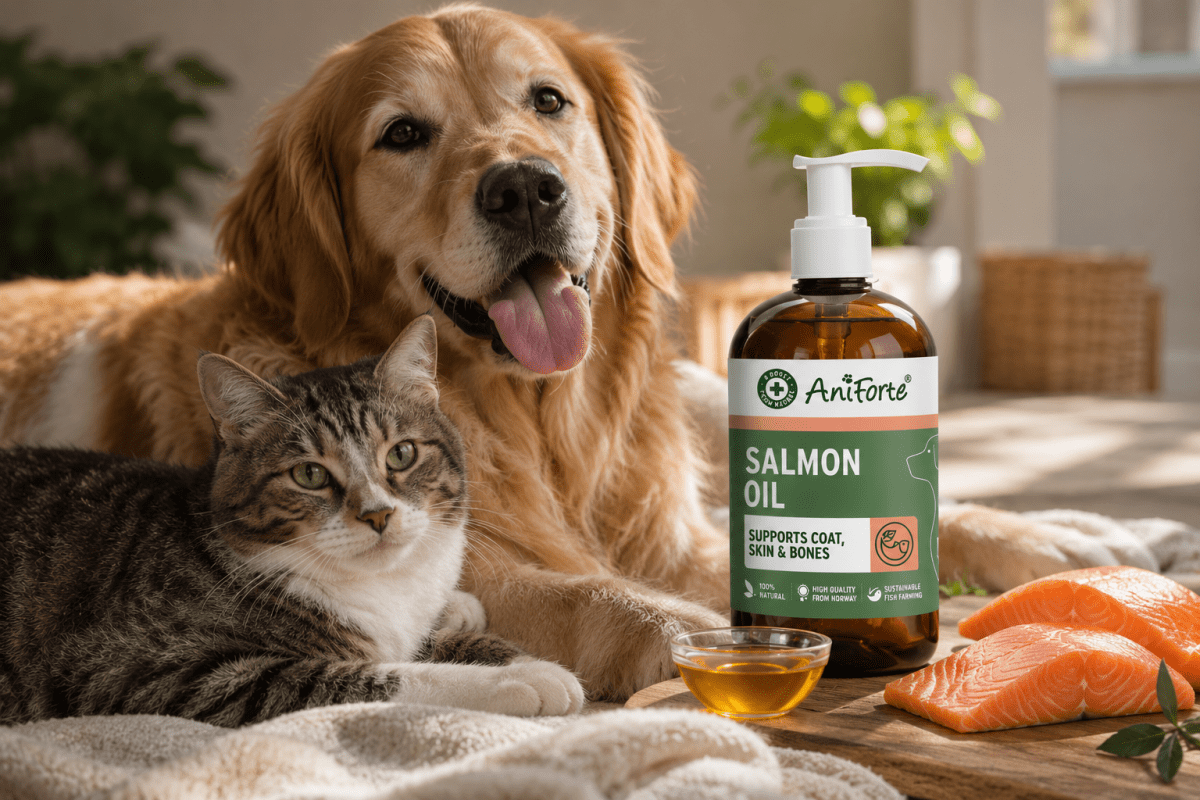
| Salmon Oil | Omega-3 EPA, DHA and ALA for skin and coat | 1 tsp per 10 kg daily | 1/4 tsp daily |
| Salmon Oil Capsules | The same omega-3, in a capsule | 1 capsule up to 20 kg, 2 over 20 kg | 1 capsule daily |
| Brewer's Yeast | Natural B vitamins for skin and a shiny coat | 1 g per 10 kg daily | 0.5 g daily |
| Linseed Oil | Plant omega-3 (ALA) | 1/2 tsp per 10 kg daily | 1/4 tsp daily |
| Organic Coconut Oil | In the bowl, or rubbed into dry patches | 1 tsp per 10 kg daily | 1/4 tsp daily |
| Algae Oil | Vegan omega-3, for pets who can't have fish | 20 drops per 10 kg daily | 10 drops daily |
You don't need all of them. One omega-3 source (salmon oil, linseed oil or algae oil) is the usual starting point, with brewer's yeast as a common partner. Give any change a few weeks before you judge it, because skin takes time to renew.
Coconut oil also works on the outside: warm a little in your palm and massage it into the dry areas.
When to see the vet
Book in with your vet if the dandruff lasts more than a few days, gets worse, or comes with bald patches, heavy scratching, scabs or a greasy, smelly coat. They can find the underlying cause with a skin examination, blood tests or a look at your dog's behaviour and routine.
Still not sure where to start?
If it is winter and the flakes appeared with the heating, start with gentle grooming, a sensitive shampoo and a daily omega-3 in the bowl. Most dogs settle down from there.
If it has been going on for a while, or the flakes are yellow and greasy, see your vet first, then use supplements alongside whatever they recommend.
And if you are not sure which supplement suits your dog, our team of veterinarians and animal nutritionists can help you choose.
Shop for skin and coat

Salmon Oil – from £6.99. 100% pure salmon oil from Norwegian fjords.

Brewer's Yeast – 250 g £10.99, 500 g £17.99. Natural B vitamins, measuring scoop included.

Fur Harmony Sensitive Shampoo – £11.99. A mild aloe vera shampoo for sensitive skin.
You will find the rest of the range in our coat and skin collection.